
Through the Heatwave
Protecting Your Model When the Temperature Climbs
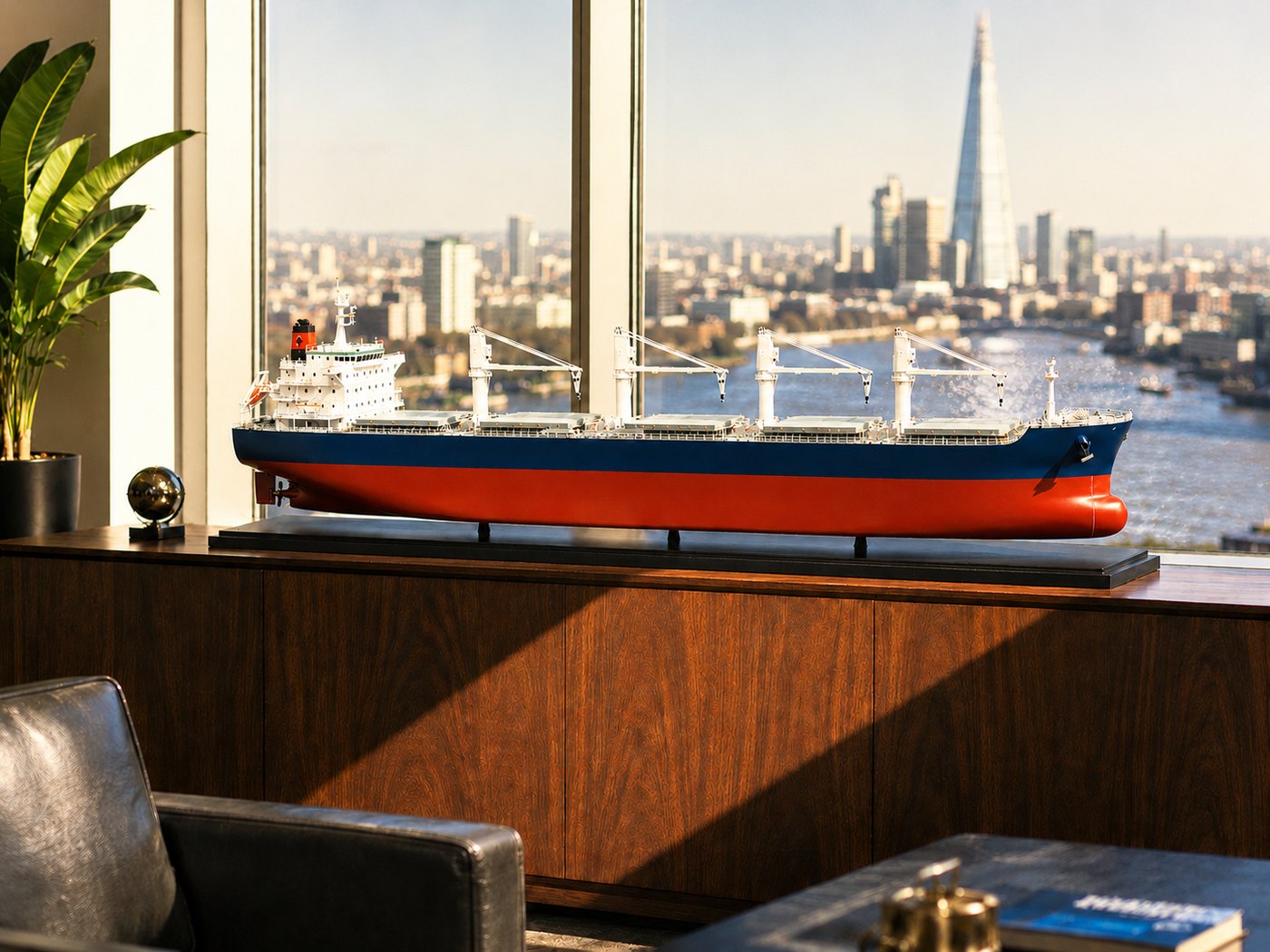
For most of the year a display case protects a model. During a heatwave it can briefly work against it, and it helps to understand why before the hot weather arrives rather than after. A sealed acrylic case standing in a warm, sunlit room behaves like a small greenhouse: the acrylic admits warmth and traps it, the air inside climbs above the temperature of the room, and the relative humidity inside swings as it does so. A model is an assembly of dissimilar materials, timber, brass, painted and lacquered surfaces, cordage and adhesive, each expanding and contracting at its own rate. That swing is where the damage happens.
Why heat, and not only sun, is the problem
The instinct is to guard against direct sunlight, and that instinct is right, but the deeper culprit is the speed of the humidity change that heat produces. Warm air holds more moisture, so as a sealed case heats up its relative humidity falls, and the timber gives up moisture and shrinks a little. When the room cools overnight the process reverses and the timber takes moisture back. Wood is perfectly content held steady; it settles to equilibrium somewhere around 45 to 55 percent relative humidity and resents being moved off it quickly. It is the rapid, repeated cycle, not the heat in isolation, that crazes a finish and springs a joint.
A protocol for a hot spell
Get it out of the sun first. Move the model, or draw blinds and curtains, so that no direct sunlight falls on the case at any hour of the day. Direct sun on acrylic is the single largest driver of the greenhouse effect, and removing it does most of the work on its own.
Steady the room, gently. Close blinds through the heat of the day and ventilate in the cool of the evening, so the model follows a soft daily range rather than a sharp one. Resist the temptation to point a fan or an air-conditioning outlet straight at the case; a cold jet on one side creates its own steep gradient, which is exactly what you are trying to avoid.
Manage the case, not just the room. In a prolonged canicule there is a case for easing a sealed enclosure open, or lifting it entirely for a few hours during the worst of the heat, so the trapped air can equalise with the room and stop running hotter than its surroundings. Add or refresh a silica gel pack to hold the humidity steady as conditions move. A small hygrometer in or beside the case removes the guesswork; aim to keep the reading between 45 and 55 percent.
Mind the rigging and any natural rope. Cordage dries and tightens in heat, and standing rigging that has gone visibly taut can pull on the points it is made fast to. Ease anything that has obviously tensioned. A trace of a conservation-grade microcrystalline wax, or a very light oil, keeps natural rope supple through a dry spell; apply it sparingly, and never let wax or oil touch sails or painted surfaces.
Watch, but do not intervene blindly. A faint tick from a case as it warms is simply materials moving, and it is normal. What you are guarding against is the fast, repeated swing, which is why every step above is really aimed at one thing: slowing the rate of change.
After the heat
When normal temperatures return, give everything a day to settle before you judge it. Timber that looked tight at the peak of the heat has usually relaxed back by the following morning. If a joint or a fitting has genuinely moved, leave it as it is and bring it to us rather than forcing it back, since forcing a stressed joint tends to do the lasting harm that the heat itself did not.
A heatwave is manageable, and a model that is kept out of the sun and held to a steady humidity will pass through one untouched. If a hot spell is forecast and you are unsure how your particular piece will take it, write to us at wave@mareascalemodels.com with where and how it is displayed, and we will give you guidance specific to it.